ADVANCED AI HAIR & SCALP ANALYSIS | 3D HAIRLINE SIMULATION | PERSONALIZED RESTORATION PLANNING
A successful hair restoration journey begins long before the procedure itself. How many grafts are appropriate for your needs? Can your donor area support the desired coverage? And will a lower hairline complement your facial proportions? These questions deserve more than an estimate based on photographs or a promotional package.
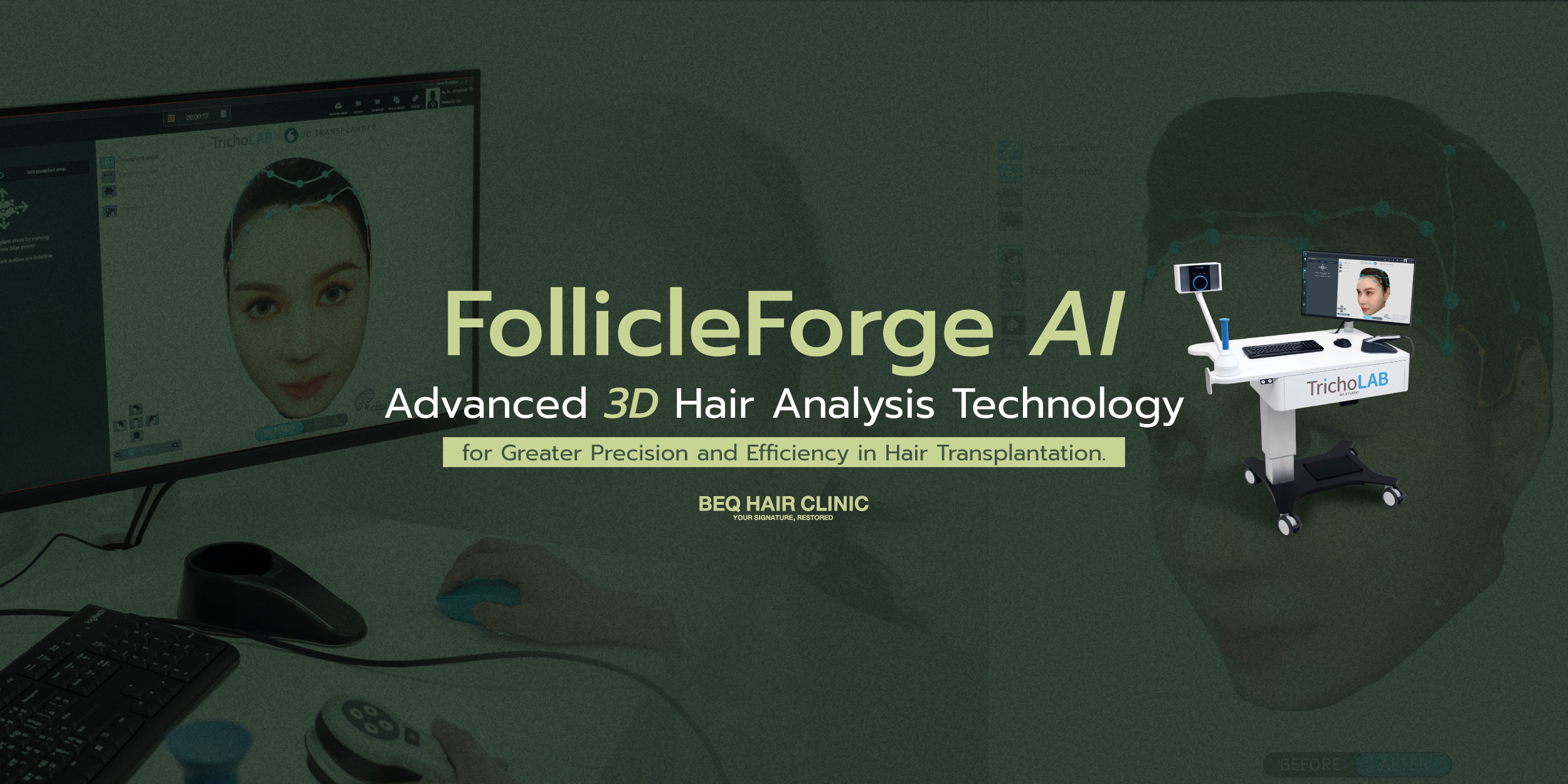
At BEQ Hair Clinic, FollicleForge AI by TrichoLAB Space Studio supports a more individualized consultation. By bringing detailed hair and scalp assessments together with three-dimensional hairline visualization, the technology helps patients and physicians discuss realistic options with greater clarity.
Why Assess Your Hair Before Considering a Transplant?
Two individuals may have a similar receding hairline or thinning pattern yet differ significantly in hair density, shaft thickness, progression of hair loss and donor-area characteristics. The same graft count is not necessarily appropriate for both.
A comprehensive assessment helps the physician prioritize treatment areas, evaluate existing hair, consider the limitations of donor supply and design a hairline that balances aesthetic goals with medical feasibility and long-term planning.
What Is FollicleForge AI by TrichoLAB Space Studio?
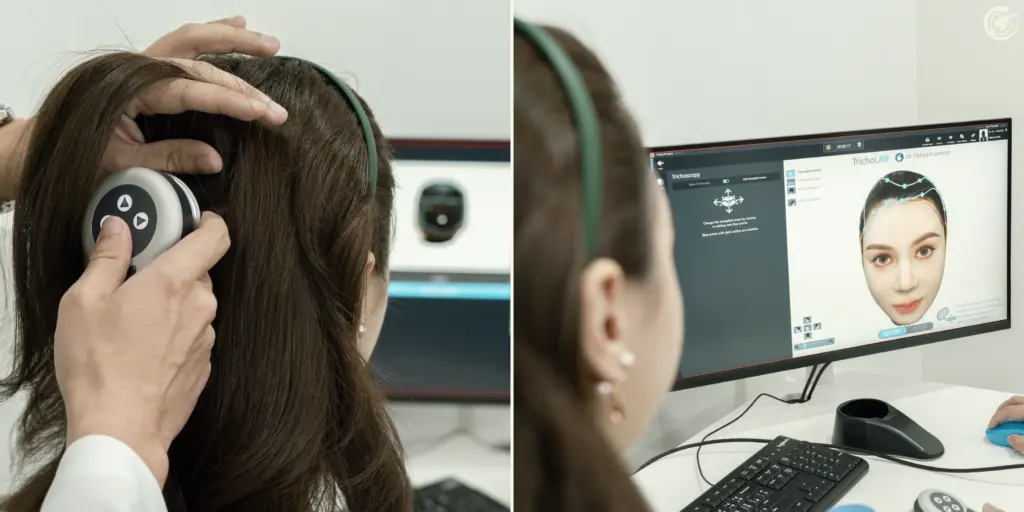
FollicleForge AI is a technology-assisted system that analyzes hair and scalp images to provide insights that may not be fully appreciated through visual inspection alone. Its 3D Hairline Simulation feature also supports discussions about hairline shape, proportions and personal preferences before a treatment decision is made.
The real value is not simply what AI can measure, but how those findings can inform the decisions that matter to you. AI-generated information complements, rather than replaces, clinical examination and medical judgment. It cannot independently diagnose the cause of hair loss or guarantee transplant outcomes.
Five Essential Insights Into Your Hair
1. Hair Density — Where Is Thinning Most Noticeable?
A closer assessment of hair density helps identify differences between areas that remain relatively full and those showing reduced coverage. These insights can support decisions about which regions may need attention first, rather than relying on a single photograph or viewing angle.
2. Hair Shaft Diameter — How Does Hair Thickness Affect Coverage?
Hair strands vary in diameter, and that variation can influence how dense the hair appears—even when the number of strands is similar. Understanding shaft characteristics helps the physician assess your existing hair and discuss realistic aesthetic expectations.
3. Hair Miniaturization — Are Individual Strands Becoming Finer?
Some hair follicles gradually produce finer strands, contributing to a thinner overall appearance. When interpreted alongside your medical history and clinical examination, signs of miniaturization may help inform whether preserving existing hair should be considered before or alongside transplantation. Miniaturization alone does not establish a diagnosis.
4. Donor Area Assessment — Is There Enough Hair to Work With?
The donor area is the region from which grafts may be harvested. Its density and hair characteristics are critical because donor supply is finite and its appearance must also be protected. If several areas require restoration, careful graft allocation and long-term planning become especially important.
5. Scalp Analysis — Is Your Scalp Ready for Treatment?
A scalp assessment can highlight visible concerns, including excess oiliness, irritation or other changes that may warrant closer examination. These observations help the physician consider whether additional care or assessment is appropriate before determining a treatment plan.
See the Possibilities Before You Decide: 3D Hairline Simulation
A well-designed hairline is about more than how low or straight it appears. Facial proportions, age, existing hair characteristics and available donor grafts all contribute to a balanced design.
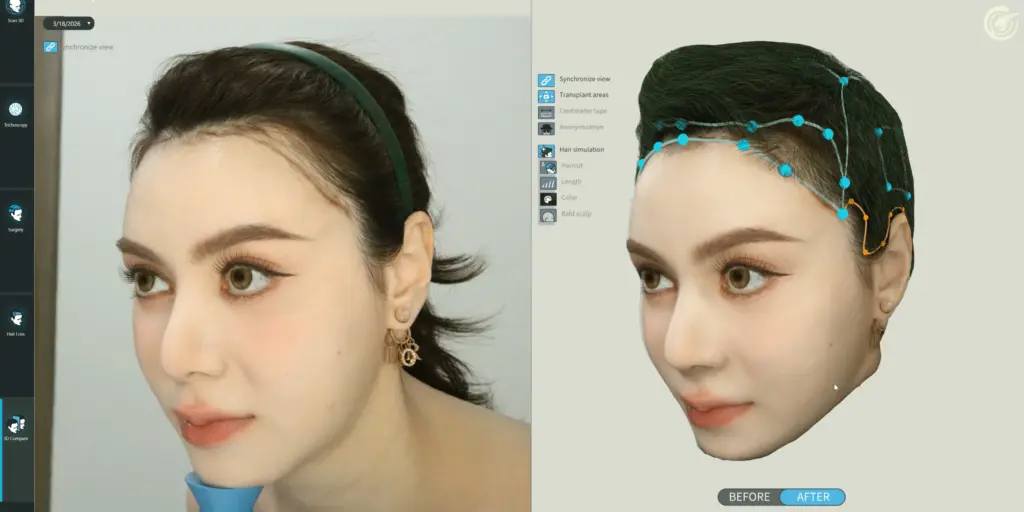
With 3D Hairline Simulation, patients and physicians can explore a proposed hairline together before a procedure. It creates a useful starting point for conversations about framing the face, achieving a natural-looking design and understanding practical limitations.
The simulation is a design and communication aid—not a prediction or guarantee that the final result will look identical to the image.
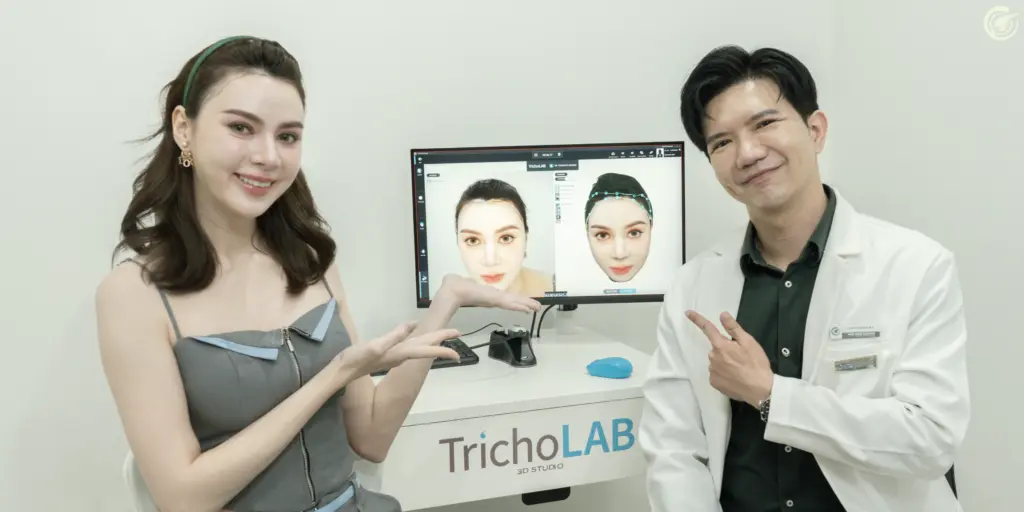
From Hair Analysis to a Personalized Restoration Plan
Rather than starting with the lowest-priced package, begin with the characteristics and needs of your own hair. A consultation informed by objective findings can help you:
- Understand the density and characteristics of the areas that concern you.
- Discuss donor-area potential and limitations before deciding on graft numbers.
- Explore possible hairline designs using three-dimensional visualization.
- Consider whether to preserve existing hair, monitor changes, or explore transplantation.
- Align expectations, timing and follow-up care with a physician-led plan.
The appropriate number of grafts and choice of treatment still depend on your medical history, physical examination, physician assessment and individual goals. AI findings should never be the sole basis for a medical procedure.
Why Choose BEQ Hair Clinic for Your Hair Assessment?
At BEQ Hair Clinic, hair analysis is more than a set of images on a screen. It becomes part of a meaningful consultation—connecting your concerns with the possibilities of hairline design, donor-area planning and individualized care under medical supervision.
Our goal is to help you see the relevant information, understand your options and ask informed questions before making a decision. Whether you are noticing early thinning, considering a new hairline or seeking a second perspective on a graft estimate, a personalized assessment can be a valuable first step.
Who May Benefit From an Assessment?
- Individuals noticing thinning hair or a receding hairline who want a clearer picture of their current condition.
- People comparing hair transplant options and seeking a considered graft estimate.
- Patients concerned about donor-area limitations or those who have undergone a previous transplant.
- Individuals who wish to explore a potential hairline design before making a decision.
- People who want medical advice about preserving existing hair before or alongside transplantation.
Frequently Asked Questions
Can AI determine the exact number of grafts I need?
Not on its own. The physician must consider the intended treatment area, existing hair, donor-area capacity and your individual objectives before recommending an appropriate graft plan.
Will my actual result look exactly like the 3D hairline simulation?
No. The simulation helps communicate a proposed design. Actual outcomes depend on factors including hair characteristics, treatment technique, aftercare and individual response.
Can I have an assessment even if I am not ready for a hair transplant?
Yes. An assessment can provide a starting point for discussing your hair and potential care options. Your physician can advise whether further investigation or treatment is indicated.
Do I need to choose a transplant technique before my consultation?
No. The purpose of the assessment and consultation is to help you understand your hair and available options before selecting a treatment approach.
Make an Informed Decision Before Your Hair Transplant
A graft count or a price quotation tells only part of the story. If you are unsure how extensive your thinning is, whether your donor area is sufficient or which hairline design suits your face, begin with a professional hair and scalp assessment at BEQ Hair Clinic.
BOOK YOUR PERSONALIZED CONSULTATION
BEQ Hair Clinic | 3rd Floor, C.P. Tower, Silom, Bangkok, Thailand
📞 094-441-4965
📩 Line: @beq_haircenter
Click: http://line.me/ti/p/@beq_haircenter
Facebook: BEQ Hair Center
Instagram: beqhaircenter_dr.danai
Instagram: beq_hairclinic
YouTube: BEQ Hair Center
TIKTOK: beq_hair_center
Medical note: AI-assisted analysis is a supportive clinical tool, not a standalone diagnosis or a guarantee of treatment outcomes. Services and suitability are determined through individualized physician assessment.