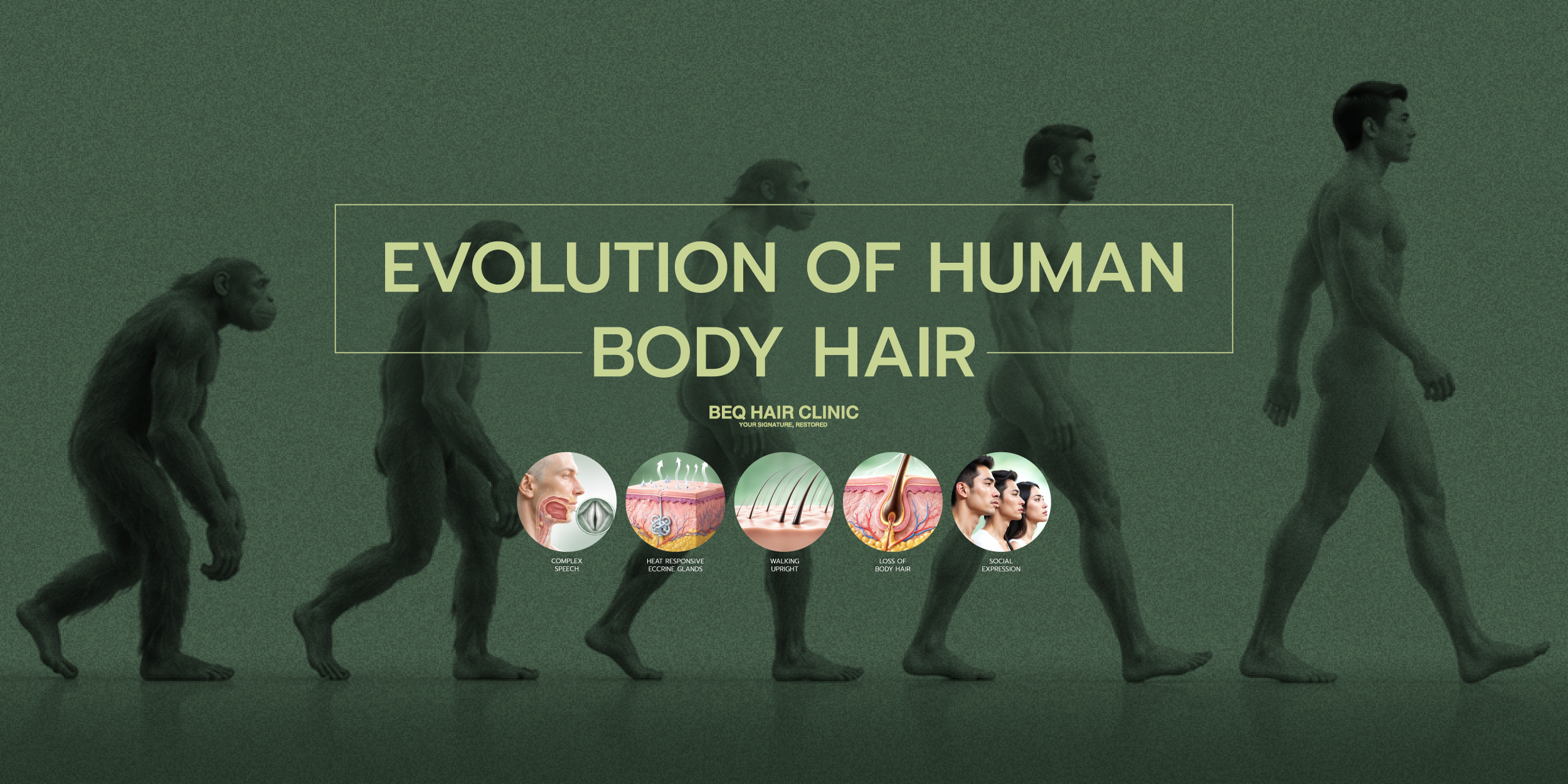
Have you ever wondered why humans retain dense hair on the scalp, yet no longer have a thick coat of body hair like our ancestors?
The capacity to regulate body temperature is considered a major feature in human evolution. It has also been proposed to have contributed to the expansion of brain volume to approximately 800 cm³, nearly twice that of chimpanzees. Improved thermoregulation may also have enabled humans to forage and hunt during the daytime, when competing animals were more likely to avoid direct solar exposure. The loss of a dense fur coat has therefore been hypothesized to have enhanced human thermoregulatory capacity, in addition to the development of efficient sweating.
Human Body Hair Evolution and Thermoregulation
Several hypotheses have been proposed to explain why humans lost this thick fur coat. The most widely accepted is the thermoregulatory hypothesis. Environmental change is regarded as a major evolutionary driver. Early human ancestors moved from forested habitats into more open environments such as savannas, where heat and humidity increased the risk of elevated body temperature. In response, eccrine glands evolved to support more effective sweating. As sweat evaporates, heat is removed from the body. Because sweat evaporates from bare skin approximately 2–3 times more effectively than from hair-covered skin, reduction of the fur coat would have allowed eccrine glands to function more efficiently in thermoregulation.
Eccrine glands are ectodermal appendages. Among primates, eccrine glands are distributed across much of the skin surface, whereas in many other mammals they are largely restricted to the plantar surfaces. Nevertheless, the primate ancestors of humans do not appear to have shown the same thermoregulatory adaptation seen in modern humans. Humans can produce approximately 4–10 times more sweat than chimpanzees. This enhanced eccrine response is therefore considered an important component of human evolution, with evaporative sweating becoming the principal cooling mechanism and reducing reliance on behavioral strategies used by other primates, such as seeking shade or sitting in shallow water.
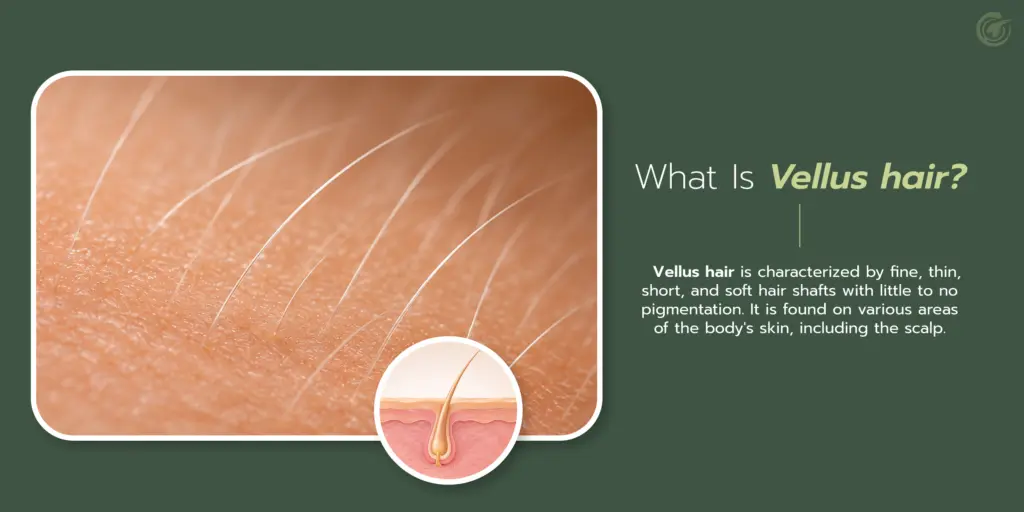
In addition to being more thermally responsive, human eccrine glands are also more densely distributed than those of chimpanzees and macaques. This observation has led to debate over whether the skin surface can accommodate both a very high density of eccrine glands and large hair follicles. One of these features may therefore have needed to decrease in size or prominence. Importantly, the number of body hair follicles does not appear to have decreased: modern humans and chimpanzees have a similar number of body hair follicles. Instead, human follicles became smaller and predominantly produce vellus hairs. Although the absence of a terminal-hair coat carries disadvantages—including reduced protection from abrasion, insect bites, and solar radiation—it also provides humans with superior evaporative cooling capacity.
Why Retain Terminal Hair in Selected Body Regions?
This raises an obvious question: if a dense fur coat was lost, why was terminal hair retained in specific regions such as the scalp, eyebrows, and eyelashes? To address this, it is useful to consider the functions of the hair follicle itself. Although vellus hairs are small, their follicles are still associated with sebaceous glands, as are terminal hairs. Hair follicles are also innervated by mechanoreceptors, allowing the detection of physical stimuli.
Hair-bearing regions also contain low-threshold C-tactile afferents that contribute to the pleasant sensation of gentle touch. These fibers are preferentially activated by slow, gentle stroking and may have relevance to both emotional and physical well-being. Hair follicles also participate in active wound repair, as epithelial and dermal stem cells can migrate from the follicular unit to contribute to cutaneous repair after injury. These functions illustrate that hair follicles serve roles beyond simply forming a physical barrier.
Changes in Hair Fiber Identity
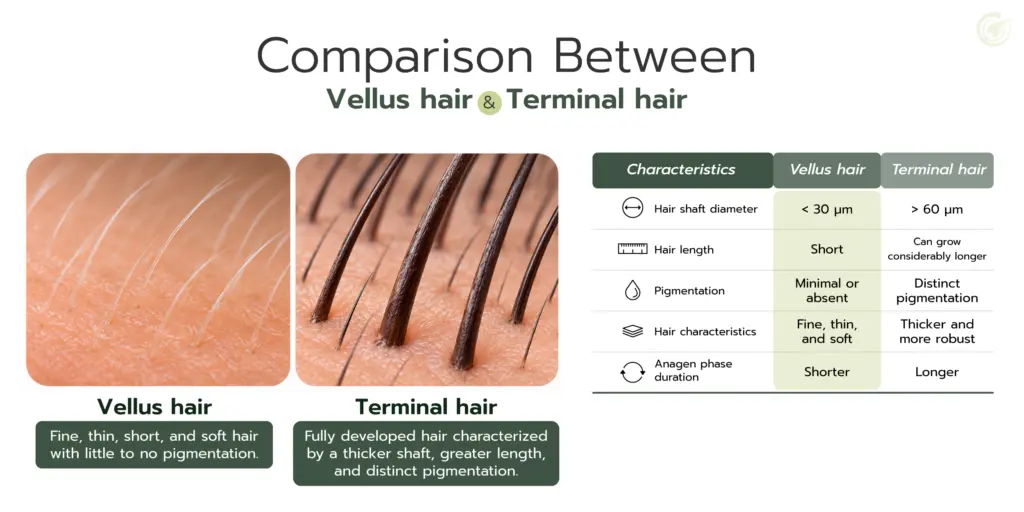
At birth, humans generally have vellus hair over most of the body and terminal hair on the scalp. With the onset of puberty, hair-fiber identity changes markedly through vellus-to-terminal transformation. This occurs in the axillary and pubic regions in both sexes, and in males it also affects facial, chest, back, and limb hair.
Boys who undergo castration before puberty (eunuchs) do not develop terminal pubic hair, whereas those castrated after puberty may show reduced terminal pubic-hair density without complete loss. Conversely, women with PCOS (or PMOS, as stated in the source text) may undergo vellus-to-terminal transformation of facial hair. These observations support an androgen-dependent mechanism, particularly involving dihydrotestosterone (DHT), which is converted from testosterone by 5α-reductase within the hair follicle.
DHT binds to the androgen receptor (AR) in the nucleus of dermal papilla (DP) cells, where the receptor functions as a transcription factor. This signaling contributes to enlargement of the dermal papilla and an increase in hair-fiber size. Terminal hairs that undergo androgen-triggered transformation begin to express keratin, type I cuticular Ha7, an androgen-responsive keratin present in the medulla and not identified in scalp hair in the source described here.
The activity of 5α-reductase varies according to genetic background and has been associated with chest-hair density. For example, populations with European ancestry have been reported to show greater 5α-reductase activity and greater chest-hair density than populations with Chinese ancestry, despite comparable serum testosterone levels.
Androgenetic Alopecia, Hypertrichosis, and Other Molecular Signals
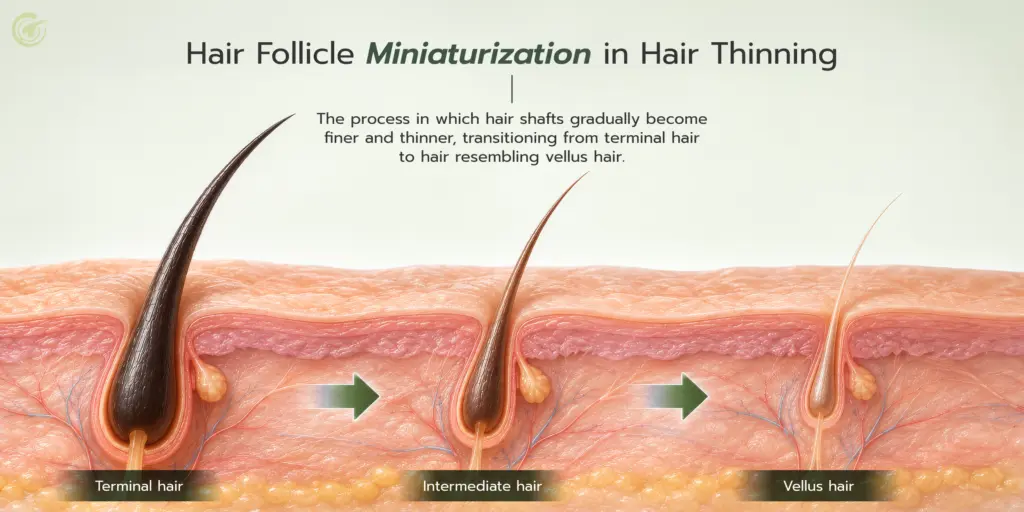
Another example of altered hair-fiber identity is androgenetic alopecia (AGA), in which terminal hairs progressively convert toward vellus-like hairs through follicular miniaturization. Genome-wide association studies (GWAS) have identified 389 loci associated with AGA, with the strongest associations continuing to involve the androgen receptor pathway.
In congenital hypertrichosis, where body hair undergoes vellus-to-terminal transformation from birth, available data remain limited. Associations have been reported with abnormal function of genes such as SOX9, TRPS1, and FGF13. Notably, these genes also have relationships with androgen signaling or the androgen receptor. Because hypertrichosis appears to reverse the usual evolutionary trend toward smaller human body hair, it has been considered an example of atavism—the reappearance of an ancestral trait that had become diminished or absent in the modern population.
Androgens are not the only factors capable of influencing hair-fiber transformation. Osteopontin (SPP1), which is present in the dermal papilla of terminal scalp hair follicles, has also been implicated in promoting hair growth.
Evolutionary Model of Human Furlessness
Although genes involved in congenital and postnatal changes in body-hair characteristics have been identified, the specific genetic mechanism responsible for the relative absence of a human fur coat remains unknown. Some evidence has been reported. In Japanese women, TBX15 and BCL12 have been associated with greater body hair, while a Polish study reported an association between IGFBP5 and body hair. Because all three genes are expressed in the dermal papilla, these findings support the view that the dermal papilla is a central regulator of body-hair phenotype. The spatial pattern and distribution of body hair are also thought to involve Hox genes.
The study discussed in the source proposes a “linear switch regulator” model to explain why human body-hair follicles generally do not enlarge into the terminal follicles characteristic of heavily haired primates. In this model, vellus-to-terminal transformation may represent a default developmental trajectory in fur-bearing primates, whereas modern humans may have evolved a regulatory mechanism analogous to a switch that suppresses enlargement of the vellus follicle.
This proposed switch is hypothesized to be regulated by genes within the dermal papilla, together with Hox-gene expression and epigenetic mechanisms such as methylation state, thereby determining the spatial pattern of hair follicles. In hypertrichosis, the switch may shift toward a state that permits terminal-hair formation. Factors such as androgen signaling, 5α-reductase activity, or SPP1 may facilitate vellus-to-terminal transformation in specific biological contexts. Importantly, this remains a proposed evolutionary model rather than a molecular switch that has been definitively identified and validated.

Social Consequences of Reduced Body Hair
The evolutionary reduction of the human fur coat may have contributed not only to thermoregulation through sweating but also to other characteristics associated with humans, including bipedalism. It has also been proposed that reduced body hair may have influenced human communication by exposing the skin surface as a medium for nonverbal signaling.
Visible skin can be modified through tattooing, body painting, piercing, scarification, and other forms of body decoration that may communicate identity, status, beliefs, and group affiliation. The authors propose that communication through body art could have provided an additional selection pressure. However, this remains speculative and should not be interpreted as evidence that body decoration was the initiating cause of body-hair loss.
Conclusion
Compared with their more heavily haired ancestors, modern humans evolved a reduction in body-hair caliber rather than a complete loss of hair follicles. This process can be described as a terminal-to-vellus transformation occurring alongside the development of highly efficient eccrine sweating. These adaptations likely improved heat dissipation through evaporation and enhanced survival in hot, open environments. Scalp hair, by contrast, was retained and may contribute to protection from solar radiation and heat.
At the molecular level, the dermal papilla, androgen signaling, developmental genes, and epigenetic regulation may all contribute to determining hair-fiber size and regional hair patterning. However, the precise evolutionary sequence remains uncertain. The proposed linear switch regulator model offers one explanation for how terminal-hair development may have been suppressed while vellus hair was retained across much of the human body.
The evolutionary significance of human furlessness may extend beyond survival. Reduced body hair may also have facilitated social and cultural expression through early forms of nonverbal communication involving visible skin. In this sense, human furlessness is not merely a biological trait, but may also represent an important feature of human evolutionary success and cultural identity.
Reference:
Redmond LC, Higgins CA. Not quite naked: the bare necessities of human body hair evolution. British Journal of Dermatology.
If you are interested in a hair transplant, or if you have concerns regarding the health of your hair or scalp, please feel free to contact us for further information:
📞 094-441-4965
📩 Line: @beq_haircenter
Click: http://line.me/ti/p/@beq_haircenter
Facebook: BEQ Hair Center
Instagram: beqhaircenter_dr.danai
Instagram: beq_hairclinic
YouTube: BEQ Hair Center
TIKTOK: beq_hair_center