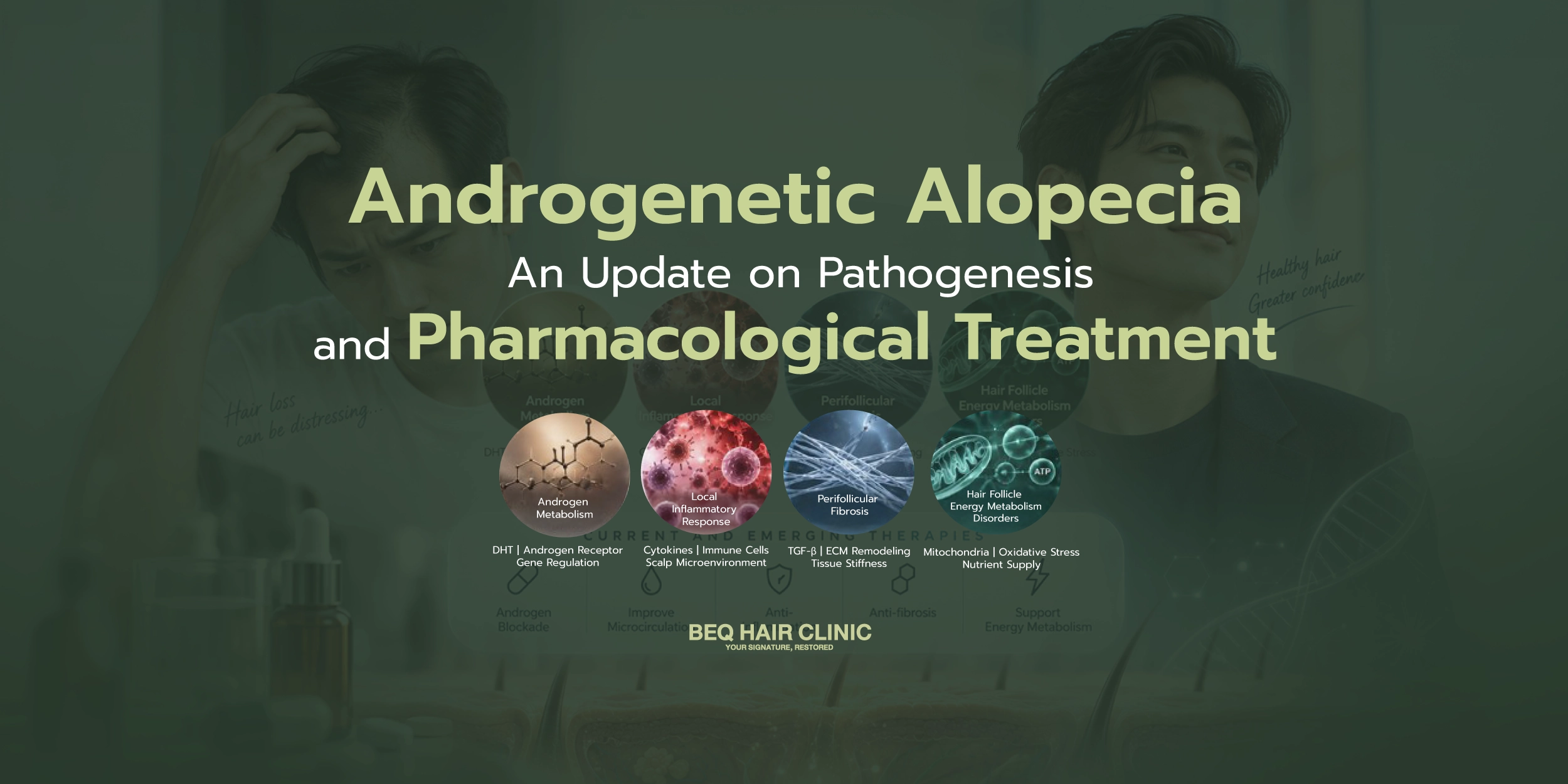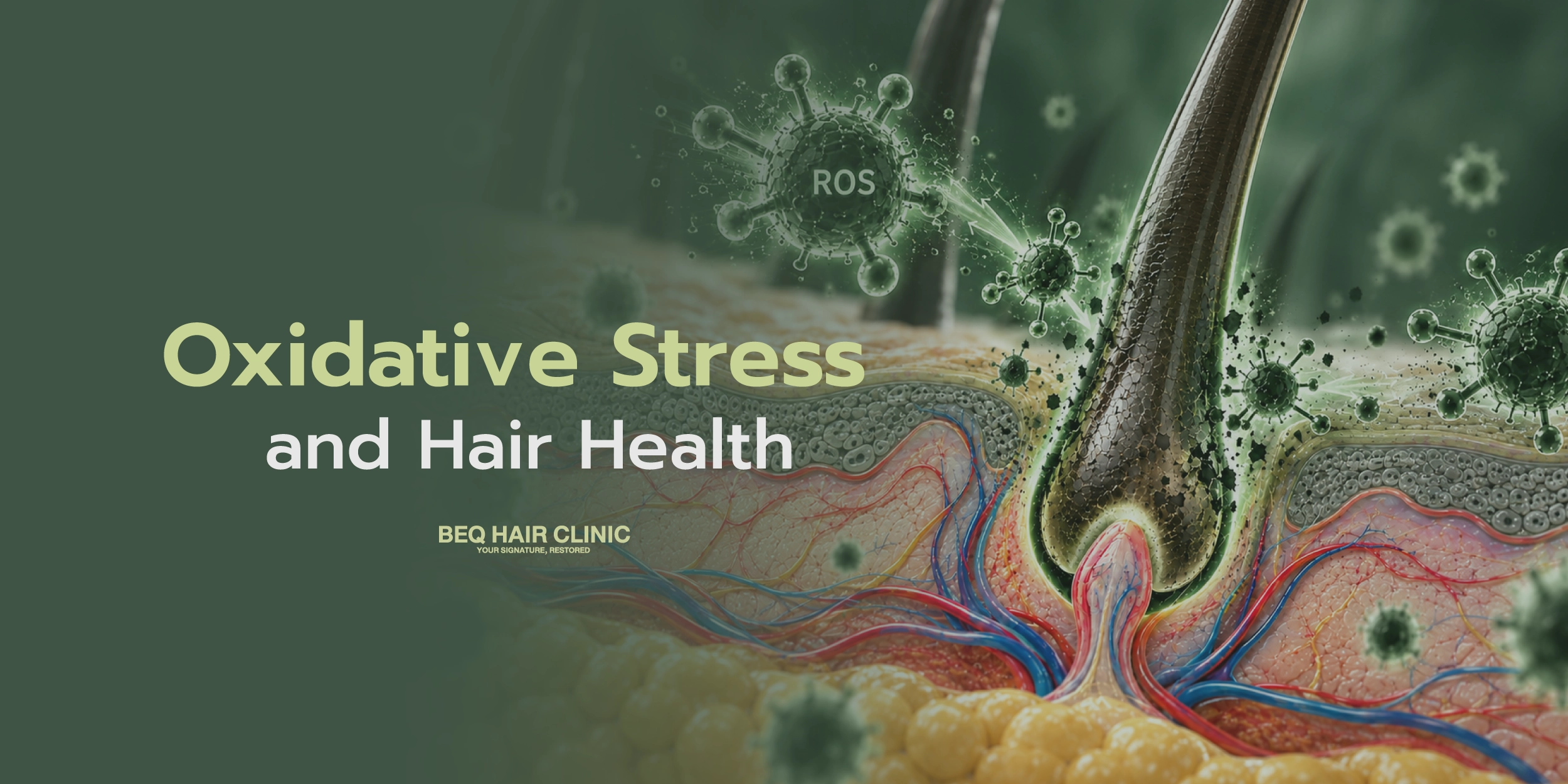
Introduction: Beyond Genetics and Hormones
Discussions of androgenetic alopecia (AGA) typically focus on genetic predisposition, androgens, ageing, and inflammation. However, the hair follicle is a highly dynamic mini-organ that continuously generates new cells while maintaining a balance between metabolic activity and cellular defence. This raises an important question: can oxidative stress disrupt follicular development and the hair cycle, and if so, how? A 2024 review by Du and colleagues examined reactive oxygen species (ROS), intracellular signalling pathways, and the potential of natural antioxidants. Their findings suggest that redox imbalance may contribute to certain forms of hair loss, although it should not be regarded as a single cause that replaces established diagnoses.
What Is Oxidative Stress?
Cells naturally produce reactive oxygen species (ROS) through metabolic processes. At physiological concentrations, ROS also function as signalling molecules. Oxidative stress develops when ROS production exceeds the capacity of antioxidant defence systems, potentially leading to lipid peroxidation, protein oxidation, DNA damage, and mitochondrial dysfunction. Depending on the cell type and degree of stress, these changes may promote inflammation, apoptosis, or cellular senescence. It would therefore be incorrect to describe all ROS as harmful substances that should be eliminated. During acute inflammation, for example, immune cells use ROS to help destroy invading pathogens. However, when inflammation persists and becomes inadequately controlled, chronic oxidative stress may exceed antioxidant defences and damage cellular structures.
Examples of ROS include singlet oxygen, hydrogen peroxide, and hydroxyl radicals. Antioxidant defence systems include superoxide dismutase (SOD), with copper- and zinc-containing forms and a manganese-containing form, as well as glutathione and glutathione peroxidase (GPx).
The Hair Follicle as a Mini-Organ
Hair production depends on coordinated molecular signalling among dermal papilla cells (DPCs), hair follicle stem cells (HFSCs), keratinocytes, and epithelial progenitor cells. The anagen, catagen, and telogen phases are regulated by a balance between growth-promoting and growth-inhibitory signals. During anagen, when the hair shaft actively elongates, follicles have particularly high metabolic demands. If oxidative stress impairs cellular function, cell proliferation may decline and hair-cycle regulation may be disrupted. A proposed sequence is:
Excess ROS → DNA and lipid damage → mitochondrial dysfunction → senescence or apoptosis → hair-cycle disruption
This is a simplified mechanistic overview, not a fixed pathway applicable to every hair-loss disorder.
How ROS Alter Cellular Signalling Pathways
The review explains that ROS do more than damage cellular structures. They may also modulate the Keap1/Nrf2/ARE, PI3K/Akt, Wnt/β-catenin, NF-κB, MAPK, and TGF-β/Smad pathways, which participate in antioxidant responses, cell proliferation, inflammation, and survival. The consequences depend on cell type, concentration, and timing. Importantly, changes in a signalling pathway observed in laboratory experiments do not establish that activating or inhibiting that pathway will treat hair loss in humans.
Wnt/β-Catenin Signalling and the Anagen Phase
Wnt/β-catenin signalling contributes to hair follicle induction, follicular development, and anagen initiation. Experimental studies suggest that increased hydrogen peroxide or other ROS may suppress β-catenin signalling and, in certain contexts, coincide with increased inhibitory signals such as DKK-1 and TGF-β. Reduced growth signalling may decrease follicular cell proliferation and contribute to earlier entry into catagen.
Nrf2 and Endogenous Antioxidant Defence
The Keap1/Nrf2/ARE system helps cells respond to oxidative challenges by regulating antioxidant-related genes and cytoprotective enzymes. In some experimental hair follicle models, Nrf2 activation has been associated with lower ROS levels and reduced oxidative injury, making it an interesting therapeutic target. However, further research on dosing, delivery, safety, and clinical efficacy is required before such approaches can be considered treatments for AGA. Activation of Nrf2 in cell culture does not, by itself, demonstrate increased hair density in humans.
PI3K/Akt, NF-κB, MAPK, and TGF-β Signalling
PI3K/Akt signalling is involved in cell survival and proliferation, while NF-κB and MAPK participate in cellular stress and inflammatory responses. TGF-β/Smad signalling contributes to hair-cycle regression and cellular differentiation. Oxidative stress may influence these interconnected pathways, but activating or inhibiting the same pathway can have different effects depending on the cell type and hair-cycle stage. Understanding them as a broader signalling network is therefore more appropriate than attributing all hair loss to a single pathway.
Oxidative Stress and Catagen
Catagen is the normal regression phase of the hair cycle, characterised by reduced proliferation and regulated apoptosis in selected cell populations. It generally lasts approximately one to two weeks. Experimental studies have shown that oxidative stress can accelerate catagen-like changes and reduce hair-shaft elongation in some models. Enhancing certain endogenous antioxidant responses has attenuated stress-induced catagen acceleration in experimental settings. Nevertheless, physiological catagen is distinct from pathological cell death, and the presence of apoptosis alone does not establish oxidative stress as the cause of alopecia in an individual patient.
Dermal Papilla Cell Ageing and Androgenetic Alopecia
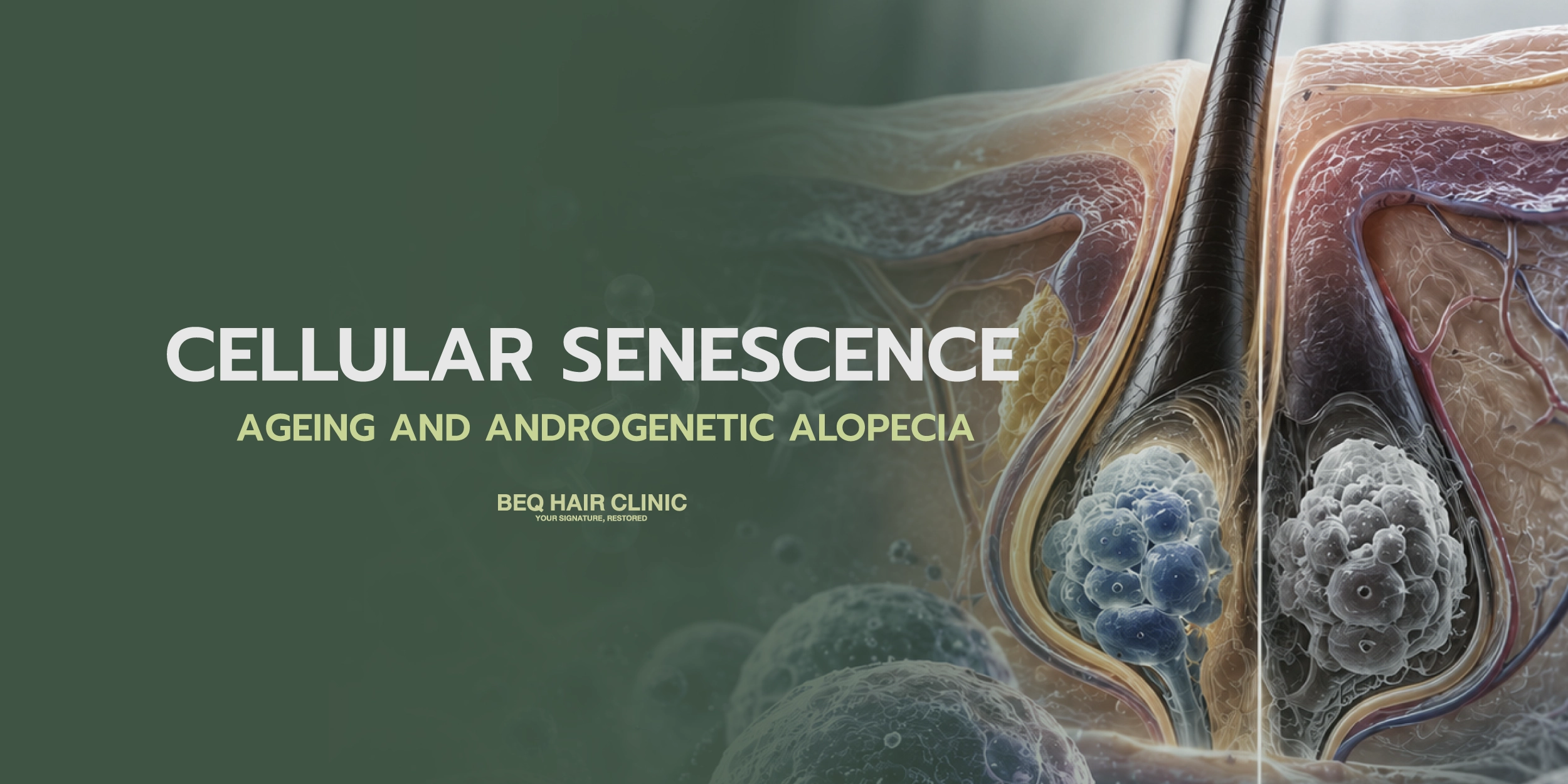
Previous studies have identified oxidative stress-associated premature senescence in dermal papilla cells from the balding scalp of men with androgenetic alopecia (AGA). When DPCs develop a senescent phenotype, their communication with the follicular epithelium may change, potentially affecting regenerative signalling. This suggests that biological processes beyond genetics and androgen activity may contribute to AGA. However, androgen-dependent follicular miniaturisation remains central to the condition; oxidative stress does not replace that established mechanism.
Mitochondria, ROS, and Cellular Senescence
Mitochondria are essential for ATP production and redox homeostasis. Impaired mitochondrial function can increase ROS generation and activate DNA-damage or cellular stress-response pathways. Senescent cells may also develop metabolic alterations, potentially creating a reinforcing cycle of mitochondrial dysfunction and cellular stress. This may be particularly relevant to hair follicles, which have high metabolic demands during anagen. However, these observations do not currently justify the clinical use of so-called mitochondrial boosters or routine ROS measurements as part of AGA treatment.
Natural Antioxidants: Evidence and Limitations
Natural compounds such as resveratrol, arctiin, and ginsenosides have demonstrated antioxidant properties and hair growth-associated effects in certain cell and animal models. Three questions must be considered separately: Does a compound have antioxidant activity? Does it affect hair growth? And, if hair growth occurs, is that effect directly attributable to an antioxidant mechanism? Translating these findings into clinical practice is complicated by differences in bioavailability, formulation, concentration, and individual responses. Current evidence is therefore insufficient to conclude that these compounds or supplements can treat AGA.
Why Antioxidants Are Not Standard AGA Therapy
Reducing ROS in cell culture does not prove that oral antioxidants increase human hair density or hair-shaft diameter. Established treatments, including minoxidil and appropriate management of androgen signalling, remain the foundation of AGA care. Any adjunctive approach should be discussed in the context of the available evidence without creating unrealistic expectations. Redox regulation is an emerging research direction, not a clinically proven cure.
Lifestyle and Metabolic Health
Oxidative stress has also been examined in relation to nutritional status, obesity, and metabolic health. Animal studies suggest that high-fat diets and obesity can increase inflammatory signalling and oxidative stress while impairing HFSC regeneration. Maintaining an appropriate body weight, eating a varied diet, and supporting metabolic health are reasonable measures for overall wellbeing and potentially for the follicular environment. However, findings in mice cannot be directly interpreted as evidence that weight loss reverses AGA or produces clinically meaningful hair regrowth in humans.
The Mediterranean Diet and Polyphenols
The Mediterranean-style diet emphasises vegetables, fruit, whole grains, and other plant-based foods containing polyphenols, which have antioxidant properties and interact with redox signalling. This dietary pattern may benefit general health, but evidence remains insufficient to establish it as a direct treatment for AGA. Correcting a documented nutritional deficiency when clinically indicated may be more important than recommending antioxidant supplements indiscriminately. Dietary changes should not replace treatments supported by stronger clinical evidence.
Applying the Evidence in Clinical Practice
Whether a patient attributes hair loss to stress, insufficient sleep, or another factor, assessment should begin with an appropriate medical diagnosis. Clinicians should distinguish AGA from telogen effluvium, alopecia areata, and inflammatory scalp disorders. Oxidative stress can then be explained as a biological mechanism that may contribute to some conditions, rather than a specific diagnosis or laboratory finding applicable to every patient. Nutrition and metabolic health advice may form part of supportive care, but claims that lowering ROS directly restores hair growth require stronger evidence from human clinical trials.
Future Directions: Hair Longevity
The most useful research question is not simply, “Which antioxidant promotes hair growth?” Rather, it is how to preserve the follicle’s biological environment and regenerative capacity for as long as possible. Future studies need to establish which cell populations experience oxidative stress, whether an intervention reaches the hair follicle effectively, and whether it improves objective outcomes such as hair counts, shaft diameter, and long-term disease progression. These steps are essential before molecular discoveries can become reliable clinical treatments.
Conclusion
Oxidative stress is not established as the primary cause of hair loss, and antioxidant supplementation is not a proven treatment for AGA. Nevertheless, molecular and experimental studies show that redox balance is involved in follicular development, inflammation, cellular senescence, and hair-cycle regulation. Future approaches to hair health may therefore combine treatment of established disease mechanisms with strategies aimed at maintaining long-term follicular health. The distinction between biological plausibility and demonstrated clinical efficacy must remain clear.
Reference
Du F, Li J, Zhang S, Zeng X, Nie J, Li Z. Oxidative stress in hair follicle development and hair growth: Signalling pathways, intervening mechanisms and potential of natural antioxidants. J Cell Mol Med. 2024;28:e18486. doi:10.1111/jcmm.18486.
If you are interested in a hair transplant, or if you have concerns regarding the health of your hair or scalp, please feel free to contact us for further information:
📞 094-441-4965
📩 Line: @beq_haircenter
Click: http://line.me/ti/p/@beq_haircenter
Facebook: BEQ Hair Center
Instagram: beqhaircenter_dr.danai
Instagram: beq_hairclinic
Youtube: BEQ Hair Center
TIKTOK: beq_hair_center