Diabetes mellitus is characterized by abnormally elevated blood glucose levels. Diabetes itself is not an absolute contraindication to hair transplantation; however, patients should undergo careful assessment of factors that may affect surgical outcomes and the risk of complications. These include the adequacy and stability of glycemic control, the presence of diabetes-related complications, and other relevant health conditions. In addition to preoperative risk assessment, patients with diabetes may require closer perioperative and postoperative monitoring than individuals without diabetes. The decision to proceed with hair transplantation should therefore be based on an overall medical evaluation, the patient’s understanding of the potential implications of diabetes for postoperative recovery, and a treatment and self-care plan designed to minimize risks to both the transplant outcome and general health, including ongoing glycemic control.
For patients who are concerned about hair thinning and searching for an answer to the question, “Can I have a hair transplant if I have diabetes?”, the answer is that hair transplantation may still be possible. The appropriate first step is to consult a qualified physician for individualized assessment of the factors above and to review the treatment plan and perioperative instructions. Patients should also bring their most recent HbA1c result and an up-to-date medication list so that treatment can be planned in accordance with their overall health status.
Can Patients with Diabetes Undergo Hair Transplantation?
Before recommending hair transplantation, the physician should assess glycemic control, any history of hypoglycemia, and diabetes-related comorbidities or complications such as cardiovascular disease, kidney disease, cerebrovascular disease, recurrent infection, impaired wound healing, or other relevant conditions. Standard hair-transplant assessment is also required, including the cause of hair loss, age, sex, severity and pattern of hair loss, and overall hair and scalp health. If, after considering all relevant factors, the physician determines that the overall risk is acceptably low, and the patient understands the treatment plan and is able to follow measures to control these risk factors, hair transplantation may be considered. The International Society of Hair Restoration Surgery (ISHRS) identifies diabetes as a risk factor that should be disclosed to the physician before hair restoration surgery; however, the presence of a risk factor does not mean that every patient must be denied treatment.
Patients with markedly elevated or unstable blood glucose levels, a history of frequent or difficult-to-treat infections, or unstable diabetes-related complications may need to postpone hair transplantation until their medical condition is better controlled. Hair transplantation is an elective procedure and can therefore be scheduled after appropriate medical optimization.
Why Is Diabetes Important in Hair Transplantation?
Hair transplantation creates small wounds in both the donor and recipient areas, regardless of the technique used. Even with Follicular Unit Excision (FUE), where individual wounds are typically small, normal tissue repair and appropriate wound care are still required. Hyperglycemia can adversely affect these processes, making glycemic status an important consideration before proceeding with hair transplantation.
A systematic review and meta-analysis of 94 studies found that diabetes was significantly associated with an increased risk of surgical-site infection. However, these data were derived from multiple types of surgery and should not be used to directly predict infection risk after hair transplantation.
Hair transplantation can also be a prolonged procedure. In patients with diabetes, factors such as delayed meals, inappropriate adjustment of glucose-lowering medication, and changes in usual eating patterns may contribute to either hypoglycemia or hyperglycemia during the perioperative period. Preoperative planning should therefore include medication management, meal planning, and a strategy for monitoring blood glucose so that glycemic control can be maintained throughout the procedure.
What HbA1c Level Is Recommended Before Hair Transplantation?
HbA1c reflects average blood glucose over approximately the preceding 2–3 months. The 2026 American Diabetes Association (ADA) guidance recommends a preoperative HbA1c target of less than 8% for elective surgery, using a result obtained within the previous 3 months, while also considering the patient’s overall clinical status and other risk factors.
The Endocrine Society provides similar guidance, suggesting a preoperative HbA1c target below 8% and a preoperative blood glucose range of 100–180 mg/dL.
**These values are general perioperative targets and are not hair-transplant-specific safety thresholds or automatic criteria for approval.** An HbA1c below 8% does not by itself mean that hair transplantation can proceed immediately. Other clinical factors must always be considered, and decisions should not be based on a single laboratory value. This is particularly important in patients with conditions such as anemia or kidney disease, which may affect the interpretation of HbA1c.
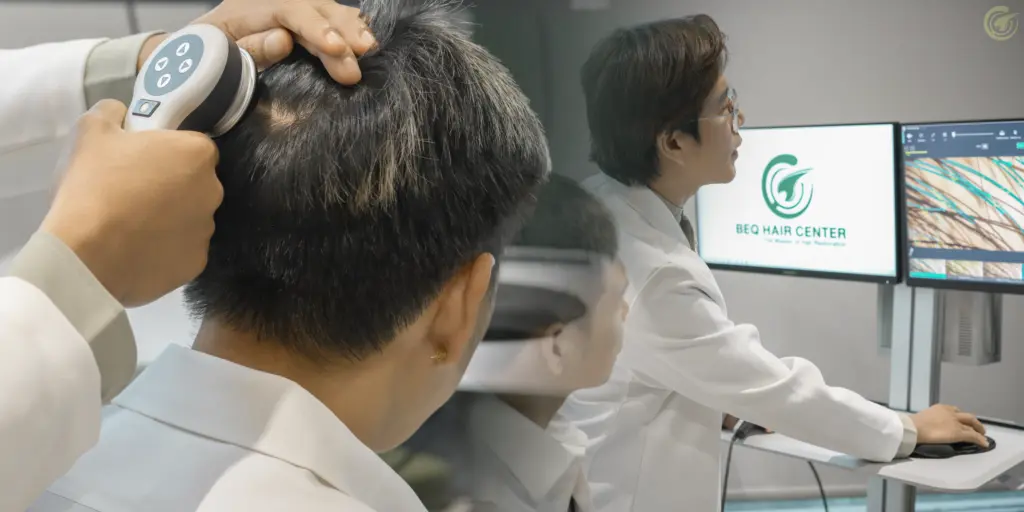
Hair and Scalp Assessment with FollicleForge AI at BEQ Hair Clinic in Patients with Diabetes
Hair-transplant planning begins with a comprehensive assessment of the hair and scalp in every patient. When diabetes is also present, the evaluation should be particularly individualized in order to optimize outcomes and reduce the risk of complications. Because hair and scalp characteristics vary considerably between individuals, accurate assessment requires the clinical knowledge, expertise, and experience of the treating physician. BEQ Hair Clinic uses **FollicleForge AI** as an adjunctive analytical tool to support physician-led assessment and personalized treatment planning. The system assists with evaluating hair density, donor-area characteristics, and estimated graft requirements, providing additional information that can support clinical planning and patient counseling, including in patients with diabetes.
These data can help patients better understand their condition and treatment plan. The physician interprets the **FollicleForge AI** analysis together with direct scalp examination, the pattern of hair loss, and the patient’s medical history in order to select the most appropriate management approach.
The Follicle Forge AI assessment is only one component of the overall evaluation. In patients with diabetes, it must be considered together with blood glucose control, HbA1c, current medications, and diabetes-related complications. Careful and appropriate assessment of all these factors is essential for individualized treatment planning.
The key advantage of this approach is the integration of technology-derived information with physician examination and clinical judgment, allowing care to be planned systematically from initial assessment through selection of the most appropriate treatment option.
How Should Patients with Diabetes Prepare Before Hair Transplantation?
Preparation should begin by informing the physician of the type of diabetes, duration of the condition, current glucose-lowering medications or insulin regimen, and any history of severe hypoglycemia or diabetic ketoacidosis (DKA). Patients should bring recent laboratory results, blood-glucose records, and a complete medication list, including supplements and any medications that may affect blood clotting.
Patients should also disclose any diabetes-related complications and any history of delayed wound healing. The physician will determine whether additional investigations or coordination with the clinician managing the patient’s diabetes are required. The scalp and donor area should also be assessed before the surgical plan is finalized.
Should Diabetes Medications Be Stopped Before Hair Transplantation?
Some glucose-lowering medications may need to be withheld or adjusted before an elective procedure. The hair-transplant physician and the clinician managing the patient’s diabetes should coordinate the perioperative medication plan. Patients should not stop or alter these medications on their own.
**SGLT2 inhibitors** such as empagliflozin and dapagliflozin: the ADA 2026 guidance recommends withholding these medications for 3–4 days before elective surgery to reduce the risk of ketoacidosis, which may occur even when blood glucose is not markedly elevated. The treating physician should specify when the medication should be stopped and when it may be restarted.
**GLP-1 receptor agonists** such as semaglutide: management should take into account gastrointestinal symptoms, whether the patient is in a dose-escalation phase, and the planned method of anesthesia or sedation. Multi-society guidance indicates that some patients without high-risk features may continue therapy; therefore, these medications should not be stopped routinely in every patient. Aspiration risk becomes particularly relevant when sedation or general anesthesia is used.
**Insulin and other glucose-lowering therapies**: adjustments should be individualized according to meal timing and the risk of hypoglycemia. Patients with type 1 diabetes should not discontinue their basal insulin on their own, even if fasting is required.
Is Follicular Unit Excision (FUE) or Direct Hair Implantation (DHI) More Suitable for Patients with Diabetes?
FUE is a method in which follicular units are extracted individually. Graft placement may be performed using forceps, whereas DHI uses an implanter device for graft placement. Patients with diabetes may be considered for either approach, depending on their overall clinical assessment.
Selection of the most appropriate hair-transplant program should take into account the patient’s medical status, donor-area capacity, the size of the recipient area, and the postoperative care plan. At present, there is no clear evidence demonstrating that DHI or FUE provides superior graft survival or safety specifically in patients with diabetes.
Postoperative Care After Hair Transplantation in Patients with Diabetes
Patients should follow all wound-care and medication instructions provided by the physician, monitor blood glucose according to their diabetes-management plan, maintain an appropriate meal schedule, and attend all scheduled follow-up visits. If blood glucose becomes unstable or diabetes-related symptoms develop, the treatment plan may need to be adjusted in coordination with the treating medical team.
Possible signs of wound infection include increasing pain, swelling, redness or warmth, purulent discharge, fever, or abnormal dark discoloration of the skin. These symptoms require prompt medical assessment and should not be left untreated, as infection may otherwise become more severe.

Consultation for Diabetes and Hair Transplantation at BEQ Hair Clinic
Having diabetes may require additional preparation, but it should not automatically exclude a patient from seeking evaluation for hair-loss treatment.
BEQ Hair Clinic provides hair transplantation and hair-restoration services with options including FUE, DHI, and Long Hair DHI. Before selecting a technique, patients should undergo assessment of the hair, scalp, and donor area, with consideration of individual goals and overall medical status.
**If you have diabetes and are considering hair transplantation, you may schedule a hair and scalp assessment with FollicleForge AI together with a physician consultation at BEQ Hair Clinic. Please bring your most recent HbA1c result and current medication list.** This allows the medical team to assess suitability, relevant precautions, and available treatment options before a decision is made. If your health is not yet sufficiently optimized, diabetes should be stabilized before elective hair transplantation is reconsidered.
Start planning your hair-restoration care with BEQ Hair Clinic.
*Hair transplantation carries risks, and outcomes vary between individuals. A physician assessment is required before treatment.*
## Frequently Asked Questions
### I use insulin. Can I still undergo hair transplantation?
Insulin use alone does not determine whether a patient is suitable for hair transplantation. The type of diabetes, stability of blood glucose, presence of complications, and the medication-and-meal plan during the procedure must all be assessed.
### If my HbA1c is below 8%, does that mean I can proceed with hair transplantation?
Not necessarily. An HbA1c below 8% is a general perioperative target, not a hair-transplant-specific clearance criterion. The physician must still assess overall health and other relevant risks.
### Does diabetes mean transplanted hair will not grow?
No general conclusion can be made for every patient. Diabetes is a risk factor that requires assessment, but the evidence cited in this article does not establish a specific graft-survival rate for patients with diabetes or guarantee an individual outcome. Other clinical and surgical factors must also be considered.
### Should patients with diabetes choose DHI only?
No. Other hair-transplant approaches may also be appropriate depending on the patient’s condition and treatment goals. DHI can be considered as one of several suitable options after individualized medical assessment.
### Can Follicle Forge AI determine on its own whether a patient with diabetes is suitable for hair transplantation?
No. Follicle Forge AI is an adjunctive tool that supports the assessment of the hair and scalp. The decision to proceed with hair transplantation still requires physician examination, review of relevant laboratory results, and assessment of the patient’s underlying medical conditions.
References:
1. American Diabetes Association Professional Practice Committee for Diabetes. 16. Diabetes Care in the Hospital: Standards of Care in Diabetes—2026. Diabetes Care. 2026;49(Suppl 1):S339–S355.
2. Korytkowski MT, et al. Management of Hyperglycemia in Hospitalized Adult Patients in Non-Critical Care Settings: An Endocrine Society Clinical Practice Guideline. J Clin Endocrinol Metab. 2022;107(8):2101–2128.
3. International Society of Hair Restoration Surgery. Hair Restoration Surgery Risk Factors.
4. Martin ET, et al. Diabetes and Risk of Surgical Site Infection: A Systematic Review and Meta-analysis. Infect Control Hosp Epidemiol. 2016;37(1):88–99.
5. Kindel TL, et al. Multi-society clinical practice guidance for the safe use of glucagon-like peptide-1 receptor agonists in the perioperative period. Surgical Endoscopy. Published online 2024.
6. BEQ Hair Clinic. เว็บไซต์ทางการ: ข้อมูลบริการ และการประเมินก่อนปลูกผม (ใช้ยืนยันข้อมูลบริการ ไม่ใช่หลักฐานเปรียบเทียบประสิทธิผลทางการแพทย์).
7. BEQ Hair Clinic. Hair Transplant Bangkok Thailand: FollicleForge AI and AI-Powered Hair & Scalp Analysis. ข้อมูลบริการจากเว็บไซต์ทางการ ไม่ใช่งานวิจัยยืนยันความแม่นยำ หรือประสิทธิผลของระบบ
If you are interested in a hair transplant, or if you have concerns regarding the health of your hair or scalp, please feel free to contact us for further information:
📞 094-441-4965
📩 Line: @beq_haircenter
Click: http://line.me/ti/p/@beq_haircenter
Facebook: BEQ Hair Center
Instagram: beqhaircenter_dr.danai
Instagram: beq_hairclinic
Youtube: BEQ Hair Center
TIKTOK: beq_hair_center