For decades, the term “hair loss treatment” has often been associated with empty promises or surgical procedures involving wounds, lengthy recovery periods, and seemingly insurmountable limitations, such as an insufficient supply of donor hair. The traditional image of hair transplantation is simply moving follicles from one area to another. If only a small number of donor follicles remain, the prospect of regaining a full head of hair may seem almost nonexistent.
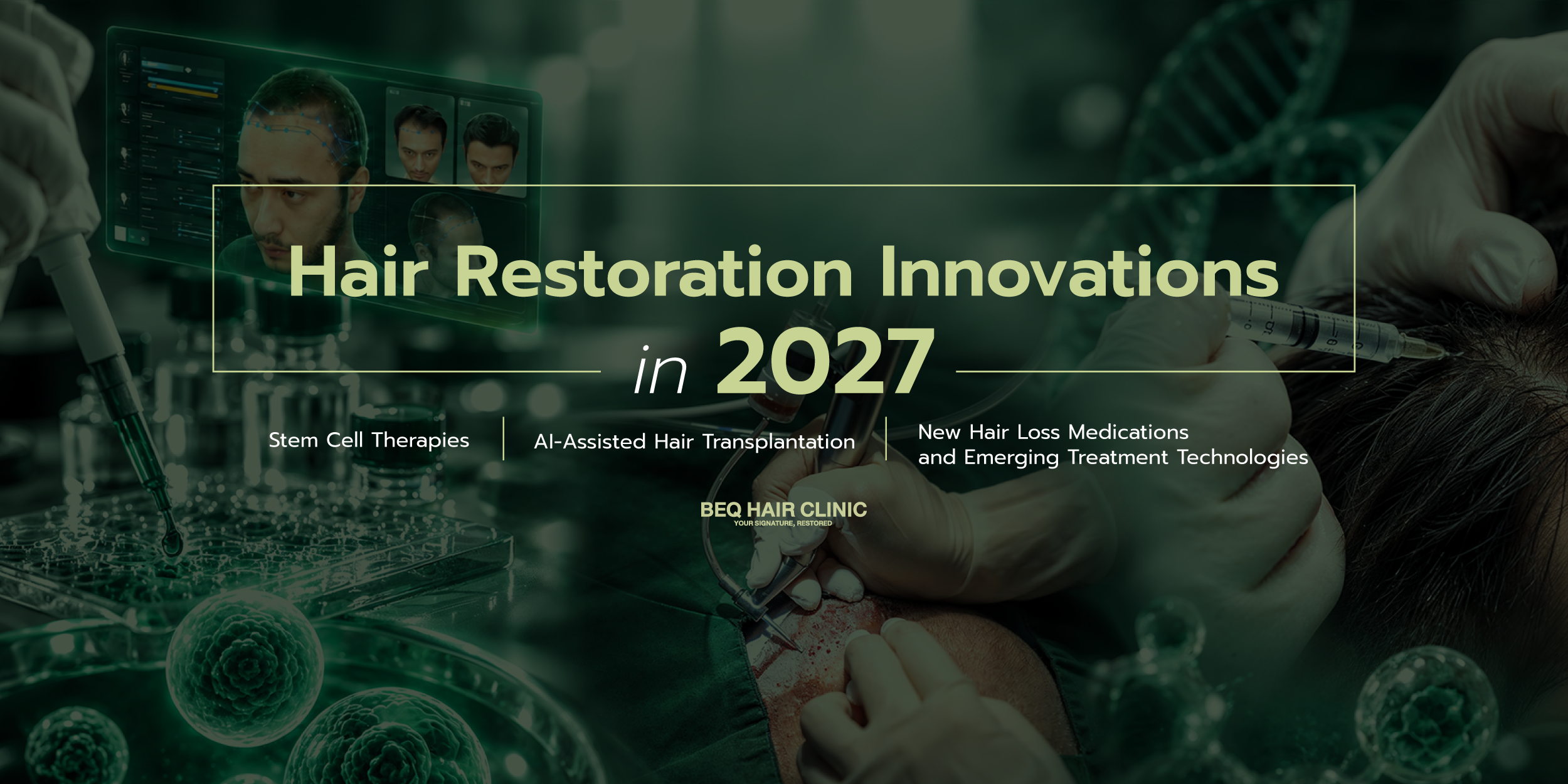
As we approach 2027, regenerative medicine and biotechnology have been researching and developing a wide range of innovations for thinning hair and baldness. Hair transplantation is no longer solely about surgical instruments and the surgeon’s procedural skills; it is evolving toward treatments based on biological regeneration at the molecular level.
This major development is more than a minor improvement to existing technologies. It represents a significant paradigm shift that may affect people with thinning hair and baldness around the world. We will explore three key pillars of the future:
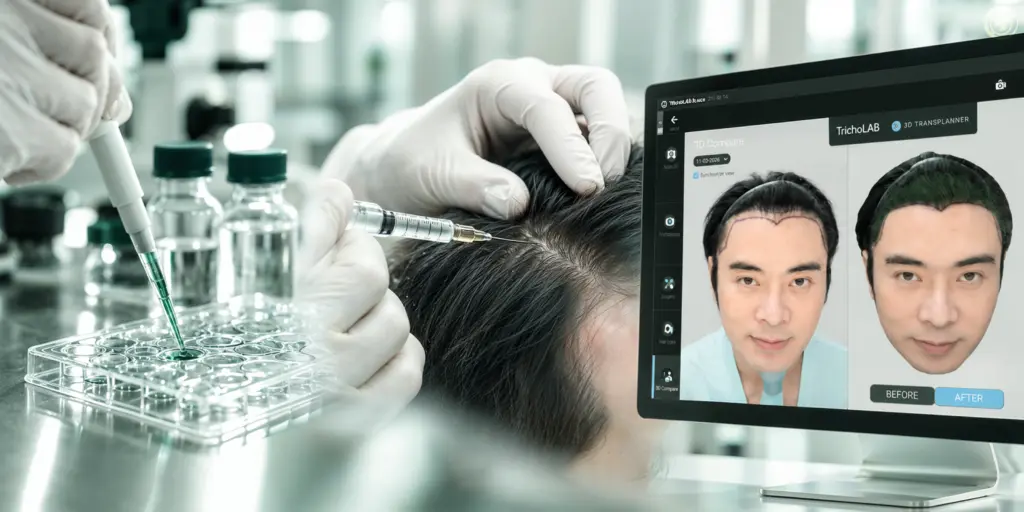
- Cellular & Stem Cell Therapies — The future of generating hair follicle cells: We will examine the history of laboratory research into hair cloning and how stem cell treatments for thinning hair may work to overcome limitations caused by an insufficient donor hair supply.
- Targeted Pharmaceuticals — Advances in more targeted hair loss medications with fewer troublesome side effects: We will explore research into new molecularly targeted treatments designed to act more specifically on the scalp, potentially offering additional medication options in the future.
- AI-Driven & Robotic Hair Transplants — Intelligent surgical innovations already being put into practice: Combining skilled surgeons with hair transplantation devices and AI-based 3D image analysis to assess hair direction and density and support more precise transplantation while reducing tissue trauma, with the aim of bringing graft survival as close to 100% as possible. We will explore how specialist physicians incorporate these technologies into hair transplantation.
Join us as we explore these three areas of innovation and discover how far hair transplantation technology has progressed by 2027.
What Is NeoGraft?
Many people experiencing thinning hair or baldness who are considering a hair transplant, as well as those who have already undergone one, will be familiar with different transplantation techniques. These include Follicular Unit Transplantation (FUT), in which a long strip of scalp is surgically removed from the back of the head, the wound is sutured closed, and the tissue is dissected into individual follicular units under a microscope for transplantation; Follicular Unit Extraction (FUE), in which a small punch is used to extract follicular units individually from across the donor area, followed by removal with forceps; and Direct Hair Implantation (DHI), which uses an implantation pen during the placement stage. All three techniques can be found at hair transplant clinics in Thailand. Today, I would like to introduce a technique that may be less familiar because of its specialized nature and, according to the article, is currently available in Thailand exclusively at BEQ Hair Clinic: NeoGraft.
NeoGraft is a semi-automated hair transplantation technology from the United States, described in the original article as having received U.S. Food and Drug Administration (FDA) clearance. It builds on the FUE technique. Before discussing the distinguishing features of NeoGraft, we should first understand how hair transplantation techniques have developed.
In the earliest conventional hair transplantation technique, a surgeon used a scalpel to remove a long strip of scalp containing healthy hair from the back of the head. The tissue was then dissected under a microscope into individual follicular units before implantation. This technique is known as Follicular Unit Transplantation, or FUT. Although FUT can provide a large number of follicular units for transplantation, removing the strip with a scalpel leaves a long linear scar at the back of the head. Recovery may also take longer, with considerable postoperative discomfort.
The field subsequently developed another technique to address some of the limitations of traditional FUT. Instead of removing a strip of hair-bearing scalp, the surgeon uses a small punch, approximately 0.8–1.0 mm in diameter, to score around each follicular unit individually. Forceps are then used to extract the graft for subsequent transplantation. This technique is called Follicular Unit Extraction, or FUE. Because the small punch wounds do not require suturing, recovery time and postoperative discomfort can be substantially reduced compared with FUT. However, extracting and collecting grafts individually with forceps can still take considerable time, and handling during extraction may cause graft trauma, potentially affecting graft survival.
Another innovation was the implanter pen. A follicular unit is loaded into the pen, which is then used to create the opening and place the graft in a single motion. This allows implantation to be performed quickly while helping control the direction of the transplanted hair. The technique using an implanter pen is known as Direct Hair Implantation, or DHI. However, it still requires additional clinical assistants to load follicular units into the pens before handing them to the surgeon for implantation.
As technology advanced, the hair transplantation field sought to overcome existing limitations and combine the advantages of different techniques to improve treatment outcomes. The medical device industry developed various robotic and automated transplantation systems, including semi-automated and fully automated approaches. Here, we will focus on NeoGraft, a semi-automated system developed to extend the capabilities of conventional FUE.
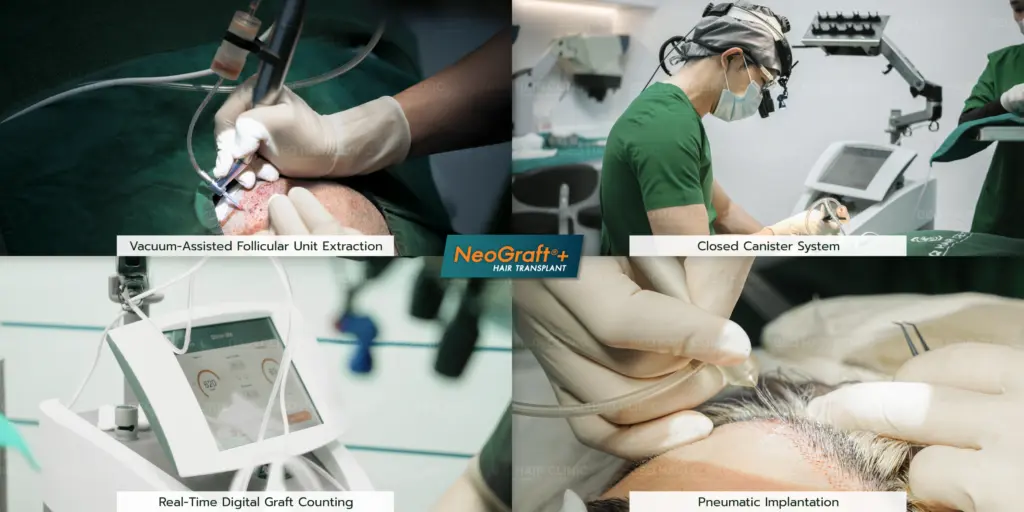
One of the factors frequently discussed by hair transplantation professionals is the graft survival rate. In addition to the treating physician’s design of a natural-looking hairline and recipient area that suits each patient’s facial features, it is essential that follicular units extracted from the donor area remain in good condition until they are implanted into areas of hair loss. NeoGraft is designed to support the treating physician through four operating mechanisms.
Four Key NeoGraft Mechanisms
- Vacuum-Assisted Follicular Unit Extraction (Pneumatic Extraction): As the physician uses NeoGraft’s specialized rotating punch around follicular units in the donor area, the punch cuts through the skin while a vacuum-assisted system draws the graft upward. A distinguishing feature is that the clinical team does not need to manually pull each follicular unit from the scalp using forceps. This is intended to reduce the risk of compression, traction, or tearing of the graft, which may contribute to graft damage.
- Closed Canister System: One of the major threats to extracted grafts is dehydration. Prolonged exposure to air can cause follicular cells to dry out and deteriorate before transplantation. According to the original article, NeoGraft transports extracted grafts into a closed collection container in which appropriate humidity and temperature are maintained, helping reduce the risk of dehydration while the grafts await implantation.
- Real-Time Digital Graft Counting: While the physician extracts and collects follicular units, the NeoGraft display counts the harvested grafts in real time. This allows the physician and team to manage graft quantities more accurately than relying on mental counting alone.
- Pneumatic Implantation (Piston Implantation): In this step, the treating physician first creates micro-incisions in the thinning or bald recipient area. The physician then uses NeoGraft’s implantation instrument, which applies gentle air pressure to move the graft into the prepared opening. The system is intended to assist the physician in maintaining consistent placement angles and orientation.
In summary, NeoGraft incorporates features intended to combine advantages and address limitations of different hair transplantation techniques. When used alongside the physician’s skills and experience, the original article describes the following potential treatment benefits:
Potential Benefits of NeoGraft
- Increased Graft Survival Rate: Reducing direct handling of follicular units with fingers and forceps, together with storing grafts in a closed system, is described as reducing graft damage and loss, thereby increasing the proportion of transplanted grafts that survive and grow.
- No Linear Scar: Because the punch openings are small, approximately 0.8–1.0 mm, healing typically leaves small, scattered micro-dot scars that can be difficult to see. This may help address patients’ concerns about the long linear scar associated with strip harvesting.
- Faster Surgical Speed and Recovery: The semi-automated system is intended to shorten the graft collection stage and reduce the time patients spend in the operating room. The article states that tissue injury is limited and recovery is relatively quick, allowing most patients to return to work the day after transplantation.
- Minimal Pain and Tissue Trauma: Because the procedure does not involve removing a strip of scalp, and vacuum-assisted punching and collection are intended to minimize trauma to surrounding tissue, the article describes less postoperative pain, numbness, and inflammation than strip-based surgery.
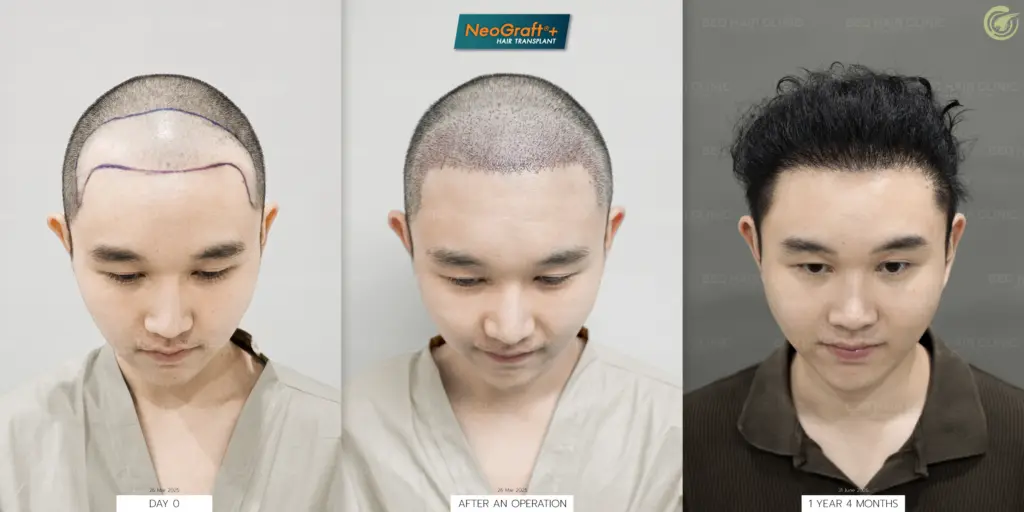
The original article therefore presents NeoGraft as an option for patients with thinning hair or baldness who wish to maximize the survival of the follicular units harvested for transplantation. This may include patients whose donor supply is limited and for whom efficient use of available grafts is particularly important. Nevertheless, achieving high-quality transplantation results depends primarily on the treating physician’s knowledge, skills, and experience. NeoGraft serves as a tool to support the physician’s work. A natural-looking, aesthetically pleasing, and lasting outcome still requires the surgeon’s expertise, technical skills, and artistry—from correctly diagnosing the cause of hair loss and assessing the appropriate number of grafts to designing a hairline that complements each patient’s facial structure, age, and natural characteristics.
If you are interested in a hair transplant, or if you have concerns regarding the health of your hair or scalp, please feel free to contact us for further information:
📞 094-441-4965
📩 Line: @beq_haircenter
Click: http://line.me/ti/p/@beq_haircenter
Facebook: BEQ Hair Center
Instagram: beqhaircenter_dr.danai
Instagram: beq_hairclinic
Youtube: BEQ Hair Center
TIKTOK: beq_hair_center